|
Yester Knott’s Berry Farm 
|
Knott’s Berry Farm Then & Then & Now Vintage Photos & 2010 Photos & 2016 Photos |
||
 |
|||
|
When I visited Knott’s Berry Farm in 2010, I brought along some historic photos from the Knott’s Berry Farm Collection of the Orange County Archives. I took photos of the same spots. Six years have passed. This week, I returned to those spots.
|
|||
|
|
|||
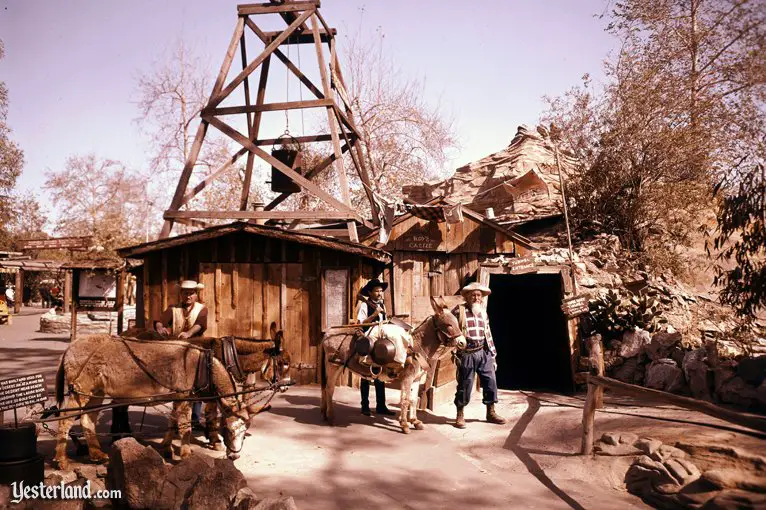
Photo courtesy of the Orange County Archives, from the Knott’s Berry Farm Collection
Gold Mine entrance (1964 publicity photo) |
|||
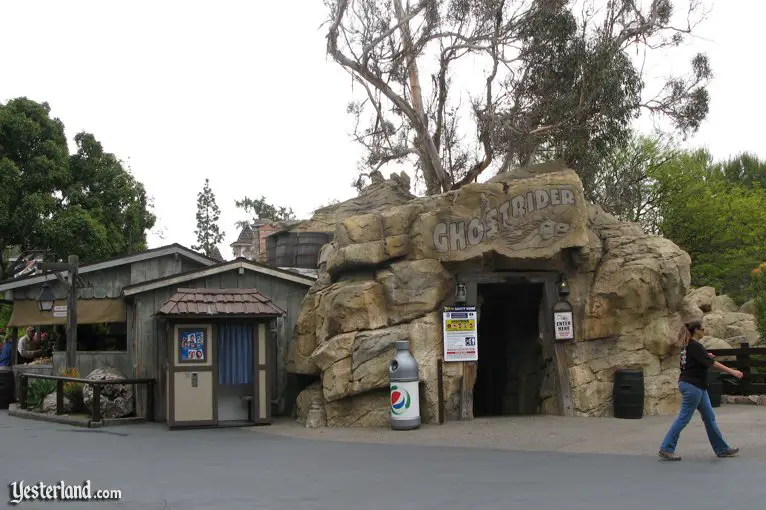
Photo by Werner Weiss, 2010 GhostRider queue entrance (2010 photo) |
|||
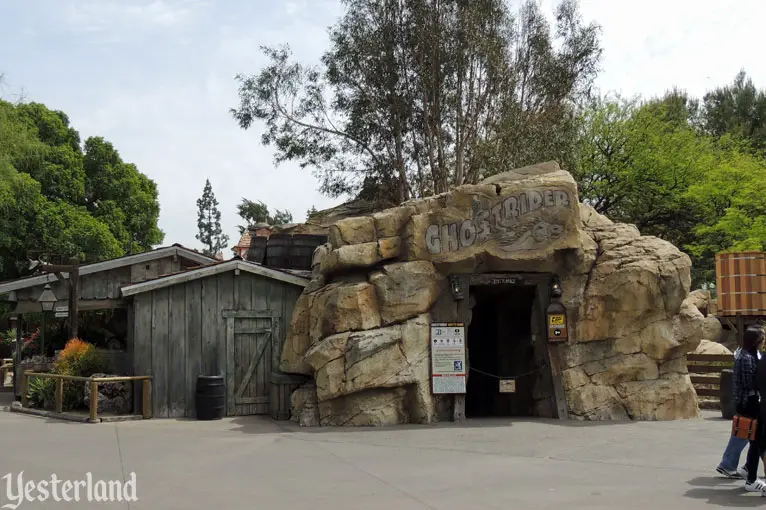
Photo by Werner Weiss, 2016 GhostRider queue entrance (2016 photo) |
|||
|
The original Ghost Town Gold Mine at Knott’s opened in 1947. It included a tunnel down to the trough where guests could pan for real gold (and take it home in a small vial). And that’s how it was for a half century. In 1998, Knott’s opened GhostRider—the longest, fastest, and tallest wooden roller coaster on the West Coast (which it still is today). The tunnel entrance was repurposed as the beginning of the thrill ride’s queue. As the 2010 photo shows, new rockwork with the GhostRider logo covered the original entrance. The out-of-place photo booth to the left of the entrance in the 2010 photo is gone in the 2016 photo. Also, notice how much larger the warning sign has become. In April 2016, Pan for Gold returned to its original location. The wooden water barrel at the right edge of the 2016 photo feeds water to the new trough. |
|||
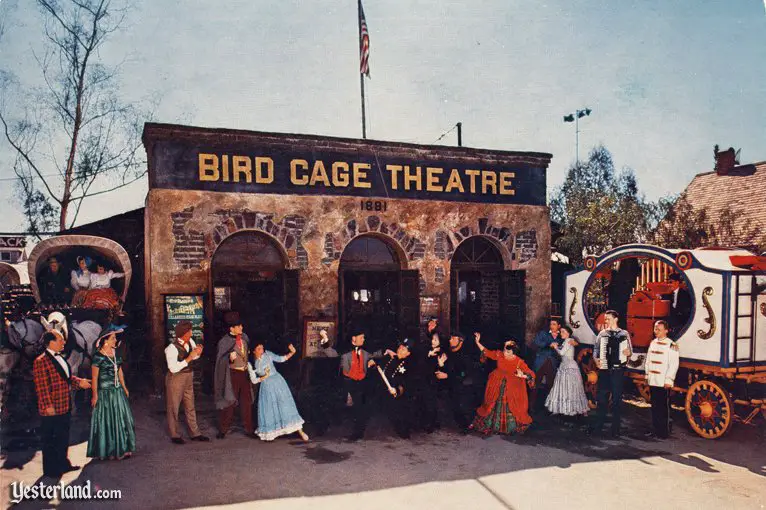
Photo courtesy of the Orange County Archives, from the Knott’s Berry Farm Collection
Bird Cage Theatre (historic publicity photo) |
|||
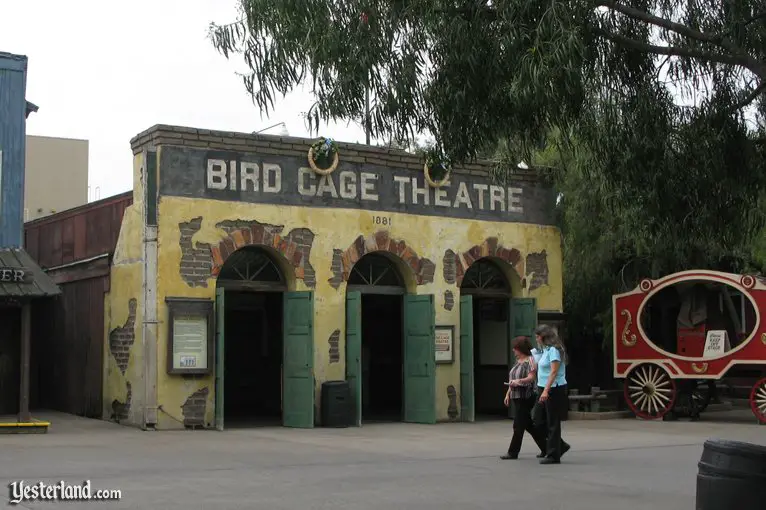
Photo by Werner Weiss, 2010 Bird Cage Theatre (2010 photo) |
|||
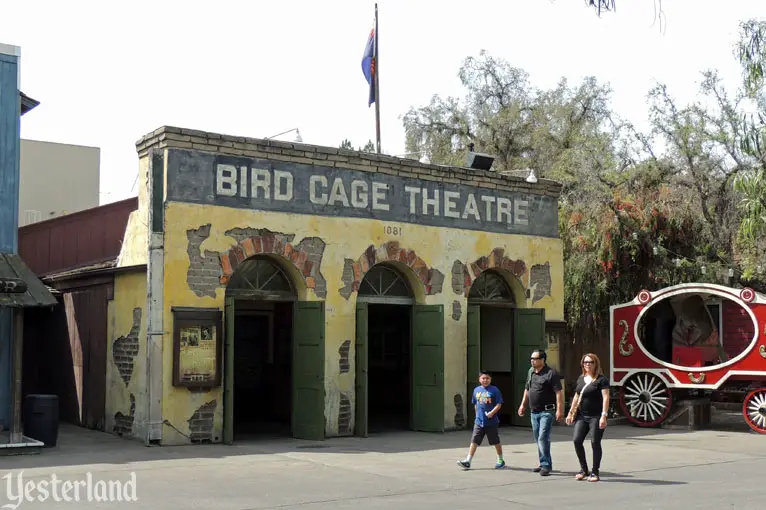
Photo by Werner Weiss, 2016 Bird Cage Theatre (2016 photo) |
|||
|
The Bird Cage Theatre opened in 1954. The façade looked just like the historic Bird Cage Theatre in Tombstone, Arizona. But behind the façade, the theater was essentially a tent with simple wooden folding chairs on tiered levels. For a half century, audiences could enjoy old-fashioned melodramas. Cheer for the hero! Boo at the villain! The melodramas were a lot of fun. They lasted until 1997. The Bird Cage Theatre is still there. It’s now used for special events and scheduled entertainment, including performances by Krazy Kirk and the Hillbillies. |
|||
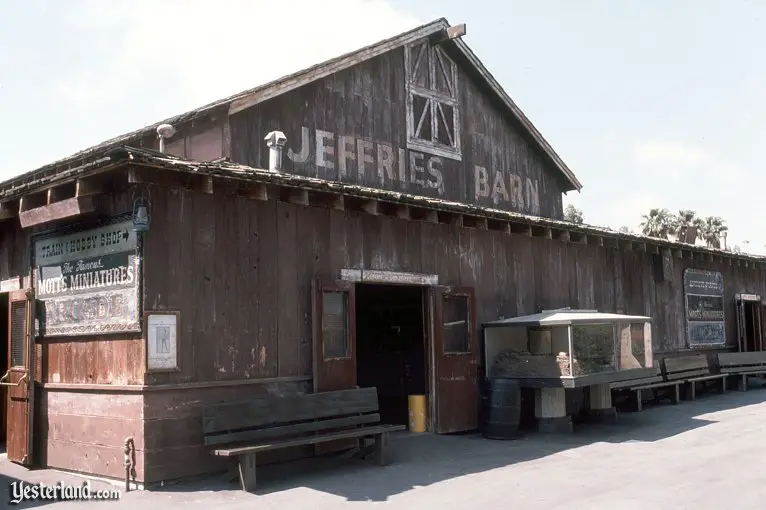
Photo courtesy of the Orange County Archives, from the Knott’s Berry Farm Collection
Jim Jeffries Barn, home of Mott’s Miniatures (1978 photo) |
|||
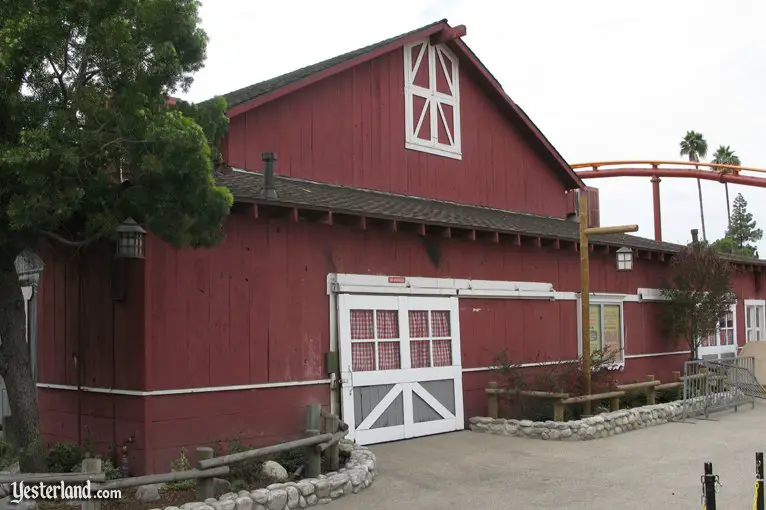
Photo by Werner Weiss, 2010 Wilderness Dance Hall (2010 photo) |
|||
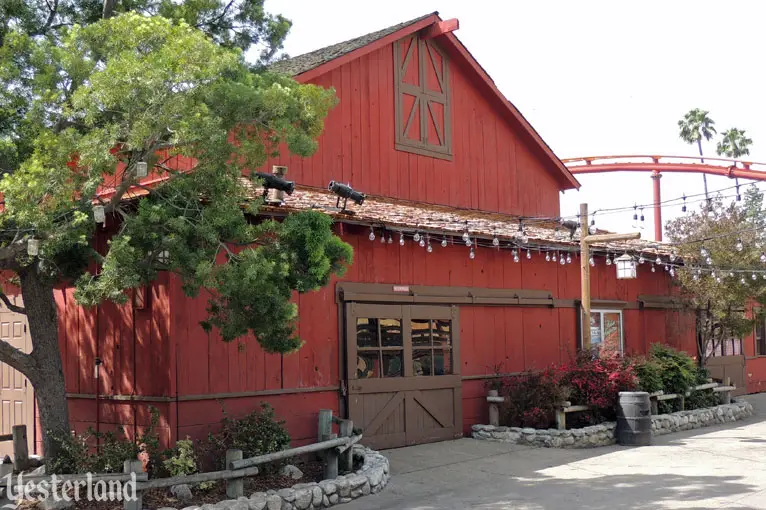
Photo by Werner Weiss, 2016 Wilderness Dance Hall (2016 photo) |
|||
|
The Jim Jeffries Barn was once located in Burbank on the 107-acre ranch of heavyweight boxing champion James J. Jeffries (1875 - 1953). Moved to Knott’s Berry Farm in 1954, the barn originally housed a boxing museum. Baby boomers will remember the Jeffries Barn as the longtime location of Mott’s Miniatures, an amazing collection of dollhouses and miniatures that called Knott’s home from 1958 until 1992. It’s now called the Wilderness Dance Hall. Knott’s uses the facility for events throughout the year. On busy summer weekends, it can serve as an additional food service location. During the Halloween season, it becomes one of the frightening mazes of Knott’s Scary Farm. During the recent Knott’s Boysenberry Festival (March 19 to April 3, 2016), the Wilderness Dance Hall offered wine and craft beer tasting to guests who purchased a tasting card. Choices included four craft brews and more than 50 different wines from 36 producers—including boysenberry beer and boysenberry wine. At other times, it can be rented for weddings or meetings. Each of the three photos shows a different paint scheme. |
|||
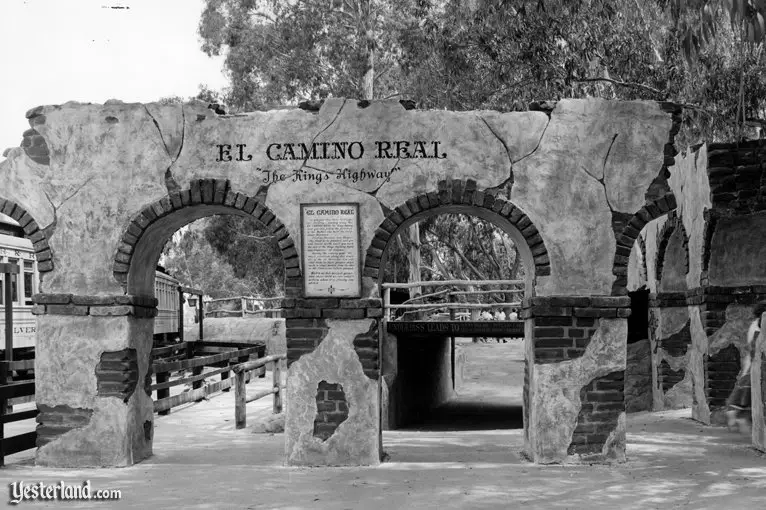
Photo courtesy of the Orange County Archives, from the Knott’s Berry Farm Collection
Pedestrian passage under the Butterfield Stagecoach route (1956 photo) |
|||
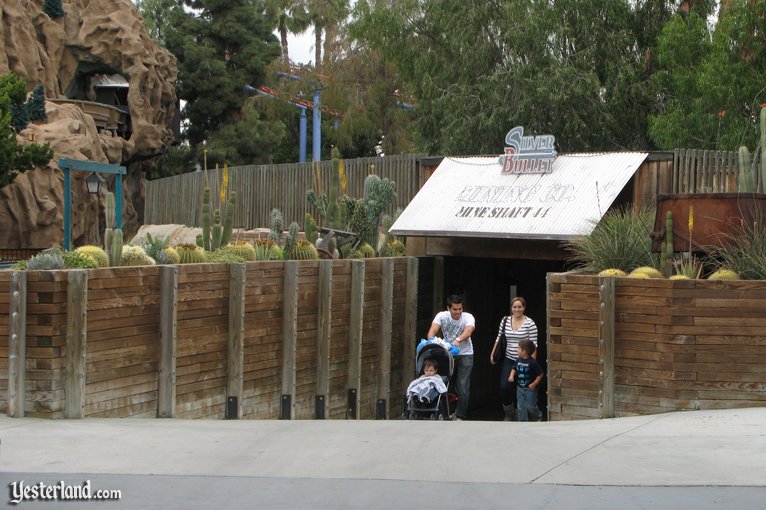
Photo by Werner Weiss, 2010 Path to Silver Bullet under the Butterfield Stagecoach route (2010 photo) |
|||
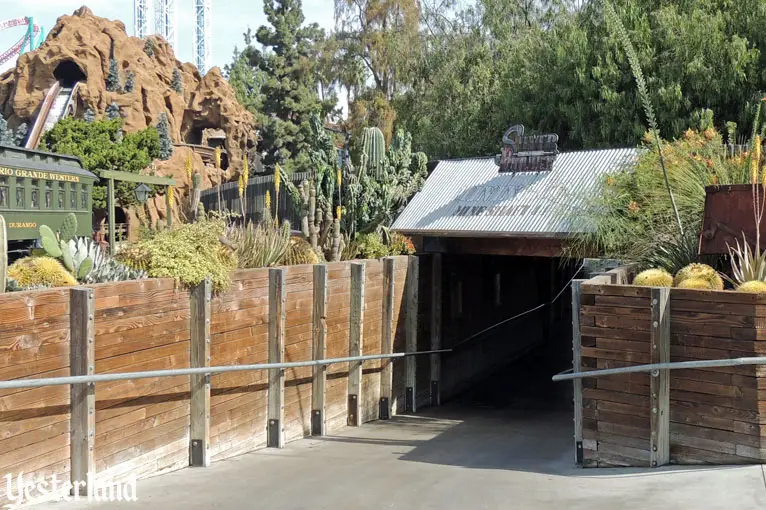
Photo by Werner Weiss, 2016 Path to Silver Bullet under the Butterfield Stagecoach route (2016 photo) |
|||
|
In California, El Camino Real (“The Royal Road” or “The King’s Highway”) was a path that connected the 21 Spanish missions that stretched from San Diego to the Bay Area. Knott’s Berry Farm had its own El Camino Real, a path connecting detailed models of the missions. The path began with mission arches and an underpass under the Butterfield Stagecoach route. The arches are gone, but the underpass is still there. It provides access to the north half of the park, including Silver Bullet, an inverted roller coaster that opened in 2004. The big differences between the 2010 and 2016 photos (aside from the different camera angle and focal length) are the addition of handrails and the growth of the cacti. |
|||
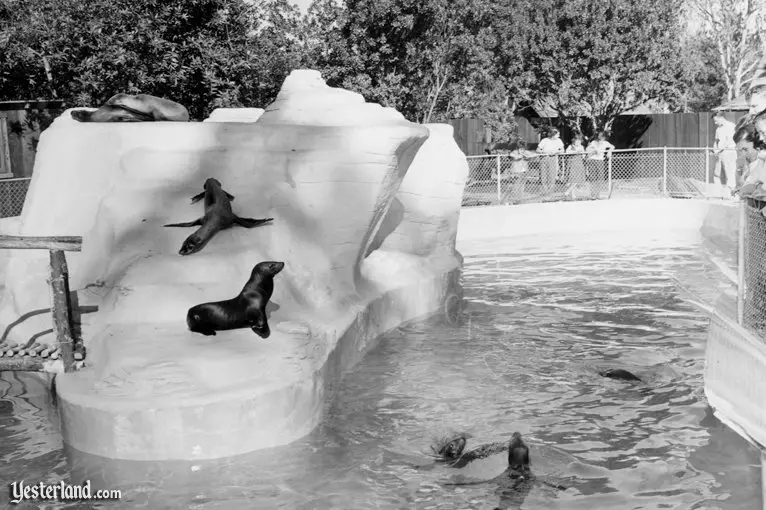
Photo courtesy of the Orange County Archives, from the Knott’s Berry Farm Collection
Seal Pool at Knott’s Berry Farm (year unknown) |
|||
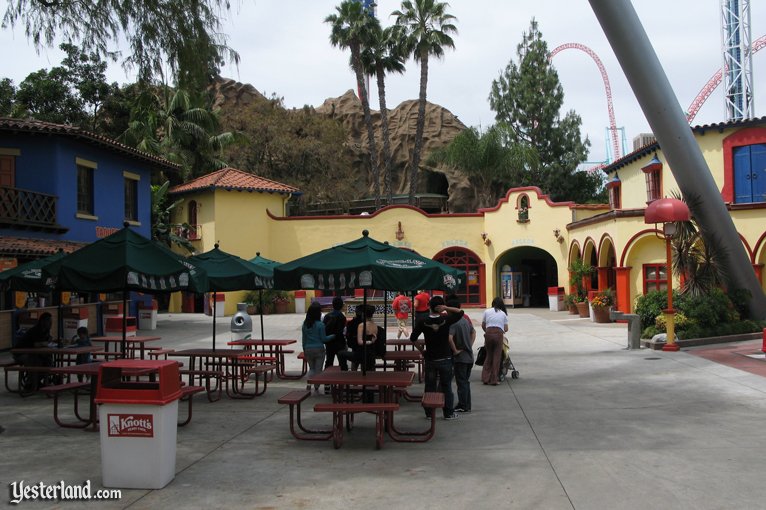
Photo by Werner Weiss, 2010 Fiesta Village, but not the exact location of the old Seal Pool (2010 photo) |
|||
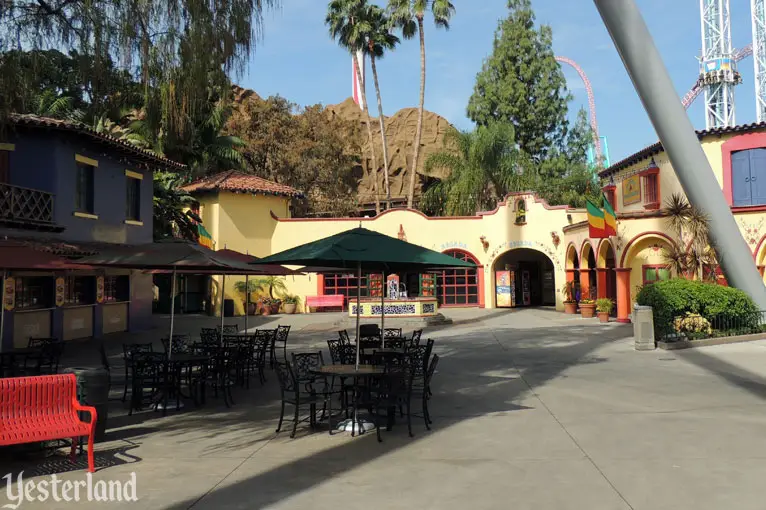
Photo by Werner Weiss, 2016 Fiesta Village (2016 photo) |
|||
|
Yes, Knott’s Berry Farm once had a “Seal Pool” (sea lion pool), one of the myriad of concessions on the outskirts of Ghost Town. Guests could buy fish chunks for the semi-aquatic marine mammals who begged for food by barking at guests continuously. There was no gate admission to Knott’s in those days, so presumably the concessionaire earned enough to operate the Seal Pool by selling the fish chunks. In mid-1968, Knott’s Berry Farm began charging a gate admission. With it came the 1969 makeover of the hodgepodge of concessions north of Ghost Town into Fiesta Village. The Seal Pool became an out-of-place component of an area that celebrated California’s Mexican heritage. But it would only remain for a few more years. The Fiesta Plaza dance pavilion replaced the Seal Pool in 1974, just in time for a Cinco de Mayo grand opening, Not much has changed between the 2010 and 2016 photos. |
|||
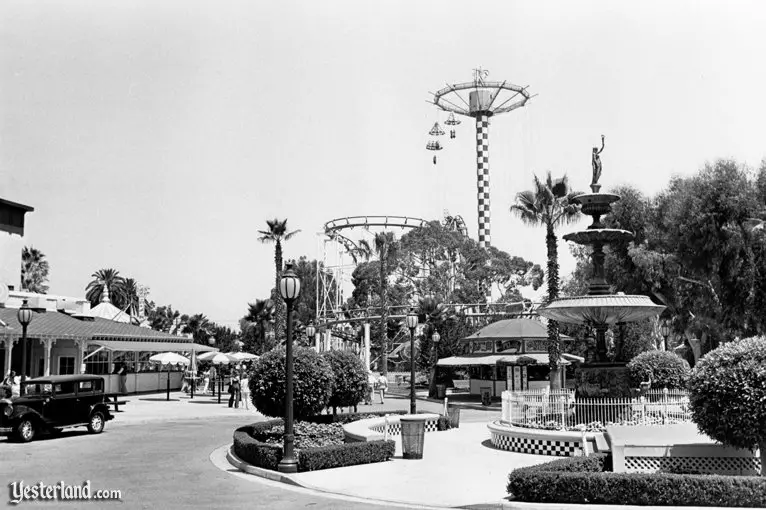
Photo courtesy of the Orange County Archives, from the Knott’s Berry Farm Collection
Charleston Square (photo circa 1976) |
|||
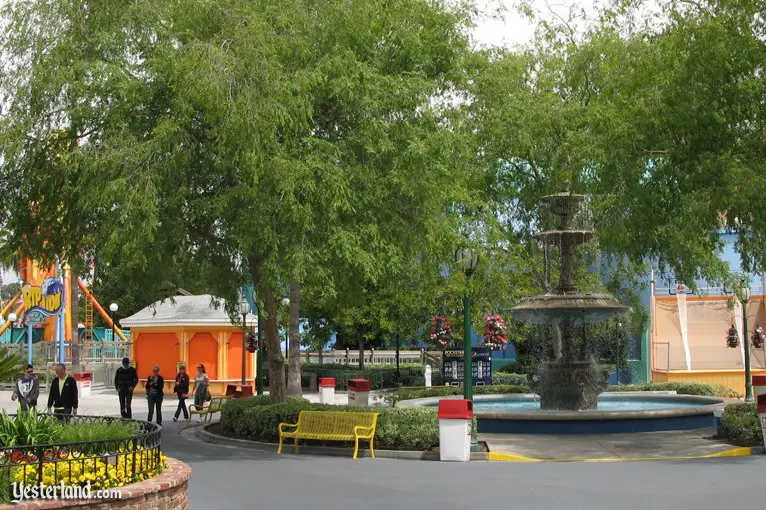
Photo by Werner Weiss, 2010 Charleston Square / Boardwalk Circle (2010 photo) |
|||
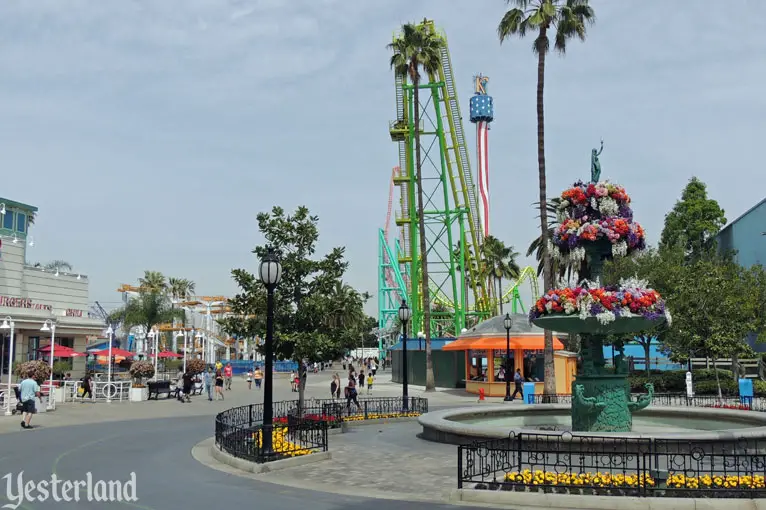
Photo by Werner Weiss, 2016 Boardwalk Circle floral fountain after Knott’s Boysenberry Festival (2016 photo) |
|||
|
In 1975, a new “land” at Knott’s, the Roaring 20’s Amusement Area, replaced the short-lived Gypsy Camp (1971) and a parking lot behind the Calico Mine Ride. Major new attractions, including the world’s first corkscrew ride and Knott’s Bear-y Tales, brought a surge of guests. A year later, another expansion, the Roaring 20’s Airfield, added eight more attractions, including the Parachute Sky Jump. Charleston Square provided the transition from Calico Square to the Roaring 20’s. Knott’s Bear-y Tales closed in 1986. The Roaring 20’s Airfield became the Boardwalk in 1996. The circular “square” and its landmark fountain are still there. This is a case where the 2010 and 2016 photos look completely different. By 2010, the large trees made it impossible to take a picture that included the fountain from the same angle as in the vintage photo. It’s much nicer now. Knott’s has put considerable effort into restoring and improving the park since Raffi Kaprelyan became Vice President & General Manager of Knott’s Berry Farm in September 2011. The Sky Cabin in the 2016 photo is also in the vintage photo, with the Parachute Sky Jump on the same tower. When you visit Knott’s, be sure to look for the Hidden Snoopy on the iron fence in the fountain area. |
|||
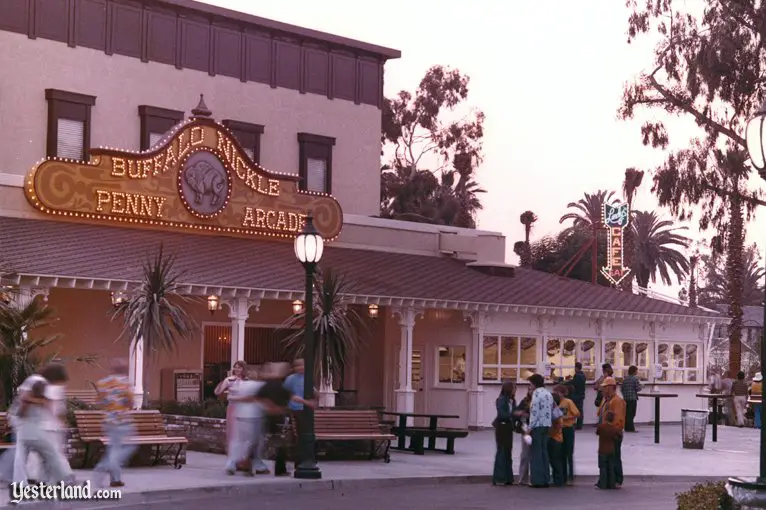
Photo courtesy of the Orange County Archives, from the Knott’s Berry Farm Collection
Buffalo Nickle Penny Arcade and Lindy’s Café (photo circa 1975) |
|||
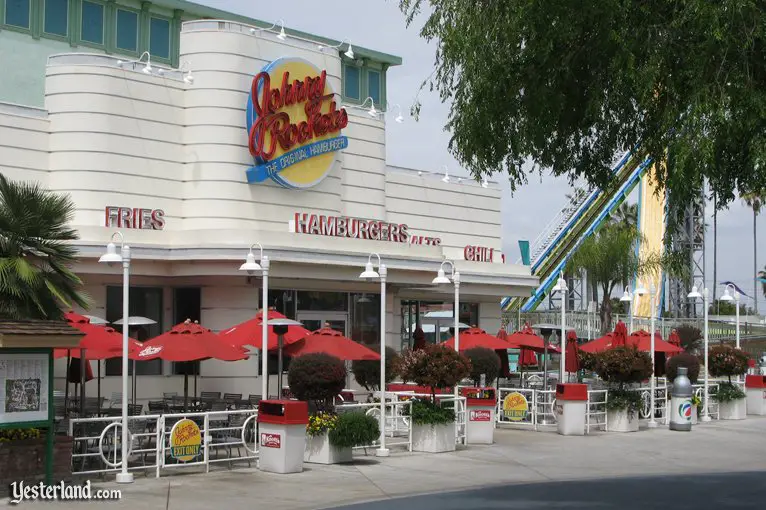
Photo by Werner Weiss, 2010 Johnny Rockets at the site of the Buffalo Nickle Penny Arcade (2010 photo) |
|||
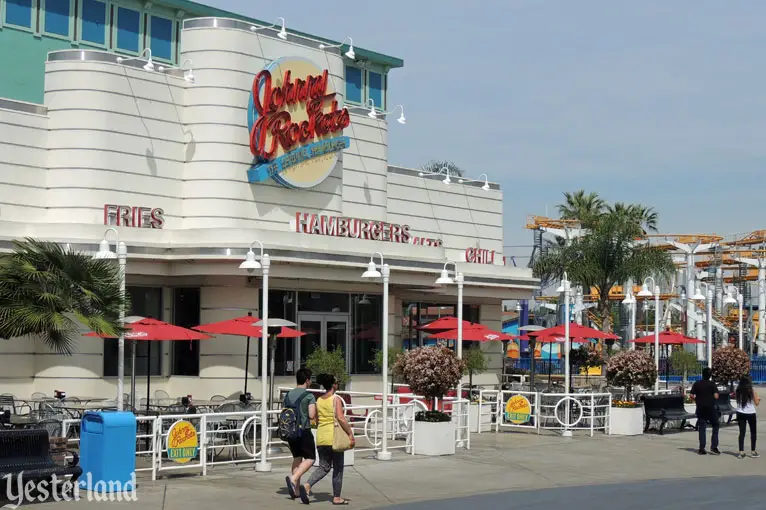
Photo by Werner Weiss, 2016 Johnny Rockets at the site of the Buffalo Nickle Penny Arcade (2016 photo) |
|||
|
The Buffalo Nickle Penny Arcade and Lindy’s Café opened as part of the Roaring 20’s Amusement Area in 1975. The rockwork canyon of Gypsy Camp (with its hidden cave entrances) gave way to a charming, old-fashioned street. It wasn’t opulent or highly detailed like Buena Vista Street at Disney California Adventure. The Roaring 20’s area was a comfortable 1920s. Since 2006, the former arcade has been the world’s largest Johnny Rockets, with 5,900 square feet of floor space and seating for more than 260. Officially part of the Boardwalk themed area, there’s no longer a 1920s theme. However, you can still make out some of the original features of the building. To the right of the restaurant, the 2010 photo shows Perilous Plunge, while the 2016 photo shows Coast Rider. |
|||
|
|
|||
|
This article only touches on the history of Knott’s Berry Farm. For more, there’s a wonderful book, Knott’s Preserved (link to Yesterland book review of the original edition, March 19, 2010). The illustrations alone are worth the price of the book. But it’s fun to read about the many attractions and shows that came and went over the years—some more successful than others. There are great stories about people who shaped Knott’s Berry Farm throughout its long history. |
|||
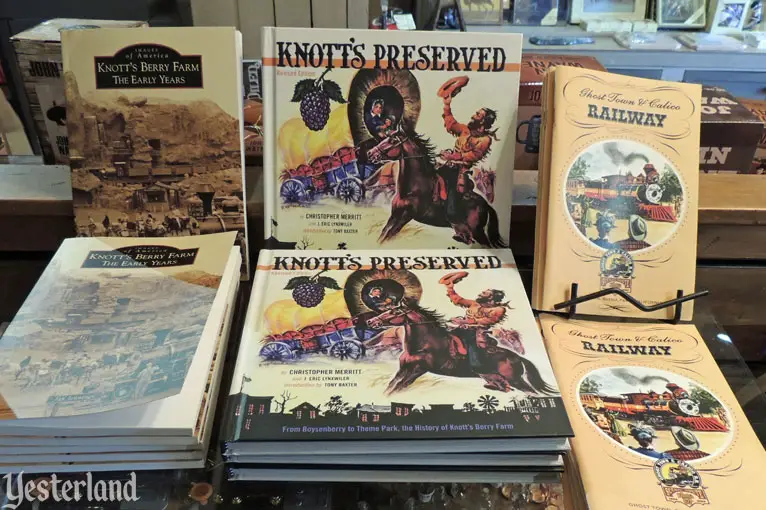 Photo by Werner Weiss, 2016 Knott’s Preserved [Revised Edition] at Knott’s Berry Farm (2016 photo) |
|||
|
Authors Christopher Merritt and J. Eric Lynxwiler and publisher Angel City Press have released a 176-page revised and expanded second edition. Knott’s Preserved [Revised Edition] (2015) is available:
hardcover |
|||
|
|
Click here to post comments at MiceChat about this article.
© 2010-2016 Werner Weiss — Disclaimers, Copyright, and Trademarks Updated April 8, 2016. |
||
 , Curator of Yesterland, April 8, 2016


